How to Measure for an Ao Dai: A Made-to-Measure Guide
Minchu NguyenQuick answer: To measure for an ao dai, take six body measurements with a soft tape over thin, fitted clothing: bust, natural waist, hip, shoulder width across the back, sleeve length and full length from the shoulder beside the neck to the hem. Keep the tape level and snug. Send the numbers as they are, never a dress size, and let the tailor add the ease.

Picture a living room in early January, a few weeks before Lunar New Year or a family wedding. A friend holds the tape at your back while you stand in socks on the hardwood, arms loose at your sides, reading each number aloud into your phone. Those ten quiet minutes decide how the silk sits when you walk into the room, so they are worth doing slowly.
Why an ao dai is measured so closely
An ao dai is Vietnam's long tunic: fitted through the bust and waist, split high at both sides, and worn over trousers. Its whole line depends on the silk following the body down to the waist and then falling away in two panels. A loose dress can borrow a size from a chart. An ao dai cut that way tends to pull across the bust or sag at the waist, which is why the garment has traditionally been cut to the woman who will wear it. If you are ordering from a shop thousands of miles away, that is good news: six careful numbers do the work of a fitting room. For background on the garment, read our guide to what an ao dai is.
What you need before you start
- A soft tailor's tape measure.
- Thin, fitted clothing, or the bra you plan to wear under the ao dai. A sweater can add an inch or more to the bust.
- A second person for the shoulder and full length measurements.
- The shoes you plan to wear with the ao dai, for the length.
- A note on your phone, with the unit written beside every number. Inches are fine; say so.
What measurements do you need for an ao dai?
You need six: bust, waist, hip, shoulder, sleeve and full length. These are the six our atelier cuts to, and many tailors ask for a similar core set, sometimes with extras such as the neck or the upper arm. The table shows where the tape goes and the slip that most often throws a number off.
| Measurement | Where the tape goes | Common slip |
|---|---|---|
| Bust | Around the fullest part of the chest, level under the arms and across the shoulder blades | The tape drops lower at the back |
| Waist | Around the natural waist, the narrowest part of the torso, usually an inch or so above the navel | Measuring where jeans sit, which is lower |
| Hip | Around the fullest part of the hips and seat, feet together | Measuring at the hip bones instead of the widest point |
| Shoulder | Across the back, from the tip of one shoulder bone to the other | Letting the tape curve up toward the neck |
| Sleeve | From the shoulder tip down the outside of the arm to where the sleeve should end | Forgetting to decide the end point before measuring |
| Full length | From the high point of the shoulder, beside the neck, down over the bust to where the hem should fall | Measuring barefoot when you will wear heels |
How to take each ao dai measurement, step by step

Bust
Stand with your arms relaxed and wrap the tape around the fullest part of the chest. Check in a mirror that it runs level all the way around, including across the shoulder blades, then breathe out normally and read the number. One finger should slide under the tape without lifting it.
Waist
Find your natural waist by bending to one side: the crease that forms is the line. Measure there, with the tape snug and your stomach relaxed. Holding your breath in feels sensible in the moment and produces an ao dai that is tight at dinner.
Hip
Stand with your feet together and move the tape up and down around the hips and seat until you find the largest number. That is your hip.
Shoulder
Ask your helper to find the bony tip at the outer edge of each shoulder and run the tape straight across your back between the two points. Keep your posture natural, chin level, without pulling the shoulders back. This number sets where the sleeve seam lands.
Sleeve
Decide where you want the sleeve to end before you measure. For a short sleeve, that is a point on the upper arm, often a few inches above the elbow. Measure from the shoulder tip down the outside of the arm to that point, with the arm hanging relaxed.
Full length
Put on the shoes you plan to wear. Your helper holds the end of the tape at the high point of the shoulder, right beside the neck, and lets it fall straight down over the bust to the floor; you then choose where the hem should land. Many women choose somewhere between mid-calf and just above the ankle, and formal occasions often lean longer. Our guide on how to wear an ao dai covers shoes and trousers in more detail.
Small habits that keep the numbers accurate
- Measure everything twice. If two readings differ by more than half an inch (about 1 cm), take a third.
- Give body measurements, never garment measurements. The tailor adds the ease, and adding your own on top produces a loose ao dai.
- Write the unit beside every number. A waist of 28 means something very different in inches and in centimeters.
- Measure even if you know your US dress size. Sizes vary from brand to brand, and an ao dai is cut to the tape, so a size 8 tells the tailor far less than six numbers do.
Do I need extra room for a loose fit or a plus size ao dai?
Send your true body measurements and describe the fit you want in words. Some modern ao dai are cut with more room through the waist, and if you prefer that softer line, say so in your reply rather than inflating the numbers. A plus size ao dai is cut from the same six measurements as any other, and the line works the same way: close at the bust and waist, then free below. Made to measure removes the size chart, so there is no size to get wrong.
How our made-to-measure ao dai works
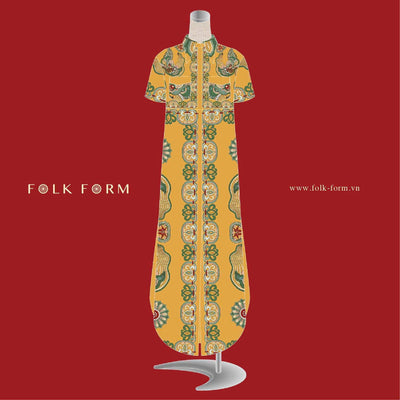
Our short sleeve silk ao dai is sewn from 100% mulberry silk in our Hanoi atelier and cut to your measurements. The price is $387, with the tailoring included. After you order, reply to the order confirmation email with your six numbers. Our team confirms them within one business day before anything is cut, and tailoring adds 3 to 5 business days before the ao dai leaves Hanoi. Because it is cut to you, it sits outside our 30 day return policy and includes one complimentary alteration instead. If you are unsure about any number, reply anyway and the team will walk you through it.
When to order for a date
From order to door, allow about four and a half weeks: 1 to 3 business days to prepare, 3 to 5 business days of tailoring once your numbers are confirmed, then 9 to 15 business days to a US address. Count back from Lunar New Year, the wedding or the photo session, and send your measurements the same day you order so the clock starts at once.
When the ao dai is a gift, the numbers have to come from her. Let her in on the plan before you order, and the morning she puts it on will still be a surprise. If you would rather give silk that needs no measuring, the hand-printed silk kimono dress has a looser cut, and our silk clothing collection shows the full range.

How much does a custom ao dai cost?
Prices vary widely with the fabric and the tailor. Ours is $387 in 100% mulberry silk, cut to your measurements, with the tailoring included. Before paying for any silk ao dai, it is worth knowing how to tell if silk is real.
Frequently asked questions
How many measurements do you need for an ao dai?
Six: bust, waist, hip, shoulder, sleeve and full length. Some tailors also ask for the neck or the upper arm.
Should I measure over clothes?
Measure over thin, fitted clothing or the bra you plan to wear under the ao dai. A sweater or a thick shirt adds bulk and makes every number too large.
Can I measure myself for an ao dai?
You can take the bust, waist and hip alone in front of a mirror. The shoulder width and full length need a second person, because both are read along your back or from a standing posture you cannot hold while bending to look.
How long should an ao dai be?
Many women choose a hem between mid-calf and just above the ankle. Measure the full length in the shoes you plan to wear, from the high point of the shoulder beside the neck.
Should I add a few inches for comfort?
No. Give your body measurements as they are and let the tailor add the ease. If you want a looser line, describe it in words.
How long does tailoring take for a Folk Form ao dai?
Our team confirms your measurements within one business day, and tailoring adds 3 to 5 business days before the ao dai leaves our Hanoi atelier.
How far ahead should I order an ao dai?
Allow about four and a half weeks from order to a US door, including 3 to 5 business days of tailoring. Send your measurements the day you order.
How do I care for a silk ao dai?
Dry cleaning is preferred for silk clothing. Tell the cleaner it is silk before it is pressed.
Browse every guide in our silk scarf and tie guides.