How to Remove Wrinkles From a Silk Scarf Without Damaging It
Iris NguyenQuick answer: To remove wrinkles from a silk scarf, hang it in a steamy bathroom for 15 to 20 minutes, or hold a handheld steamer several inches away and let the creases relax. For deeper folds, dampen the scarf lightly, lay it face down under a thin cotton cloth, and press on the lowest silk setting. Keep the iron off the hand-rolled edges.

A silk scarf comes out of a suitcase with a sharp line across the center, the kind left by a fold pressed flat for a week. You have twenty minutes before dinner. The fix is quick, and every method below relies on the same three things: low heat, a little moisture and patience.
Does real silk wrinkle?
Yes, real silk wrinkles, and mulberry silk creases when it is folded tightly, sat on or knotted for hours. Silk is a natural protein fiber, and like most natural fibers it takes the shape it is held in, especially with warmth and a little humidity.
Light silk releases creases as easily as it takes them, and a lightly creased scarf will usually hang smooth overnight. Deep creases set by heat, such as a scarf left knotted on a sunny car seat, need steam or a gentle press. Curious whether yours is silk at all? Our guide on how to tell if silk is real walks through the checks.
Four ways to remove wrinkles from a silk scarf
Start with the gentlest method and move up a step when the crease stays. The table compares them.
| Method | Time | Good for | Watch out for |
|---|---|---|---|
| Hang overnight | 8 to 12 hours | Light folds from wearing or a drawer | Clips that pinch the hem |
| Bathroom steam | 15 to 20 minutes | Travel creases, hotel rooms | Drips from the ceiling or shower rail |
| Handheld steamer | 2 to 5 minutes | Most creases on any size | Holding the head too close, water spitting |
| Iron, damp, lowest silk setting | 5 to 10 minutes | Set-in folds, knot marks | Pressing the rolled edges flat, high heat |
1. Hang it overnight
Drape the scarf over a padded hanger or a smooth wooden rod so it falls in a single layer. Avoid metal clips on the hem; they can leave a small dent that is harder to remove than the original crease.
2. Use bathroom steam
Hang the scarf on the back of the bathroom door, run a hot shower with the door closed, and leave it there for 15 to 20 minutes. Keep it well away from the spray itself.
3. Steam it with a handheld steamer
Can you steam real silk? Yes, and a handheld steamer is the method many people reach for with silk. Hang the scarf, hold the steamer head four to six inches away, and move it slowly from top to bottom. Let the vapor reach the fabric without pressing the head against it. Empty any old water and let the steamer heat fully before you start, because a cold steamer can spit droplets, and on some silks a drop of water dries as a faint ring.

4. Press it damp on the lowest silk setting
Can you iron mulberry silk? Yes, with care. Our care card for printed silk scarves says to iron on the lowest silk setting while the silk is still damp, on the reverse side. If the scarf is already dry, lay a damp, wrung-out cotton cloth over it for a minute so the moisture reaches the silk evenly; a spray bottle can leave water spots. Lay it face down on a clean ironing board, cover it with a thin cotton cloth or a white handkerchief, and press in short, lifting movements. Sliding the iron back and forth can pull the fabric out of square.
Work from the center outward and stop about half an inch from the edge. A hand-rolled hem is a small rounded tube of silk stitched by hand; ironing over it flattens it and it rarely springs back. For more on heat settings and what scorching looks like, read our companion piece, can you iron a silk scarf.
Always test a hidden spot
Before you steam or press the whole scarf, try a corner on the reverse side. Hold the steamer there for a few seconds or press the corner once, then let it dry and look at it in daylight. Check three things: the color has stayed even, the sheen has not turned shiny or glazed, and no water mark has formed. If anything changes, stop and use the hanging method instead, or take the scarf to a dry cleaner who handles silk. Dry cleaning is the safest route for any scarf you are nervous about.
What not to do
- Do not use high heat or a cotton or linen setting. Silk scorches and yellows at temperatures other fabrics shrug off.
- Do not put the iron directly on the printed face without a pressing cloth.
- Do not wring the scarf to dampen it, and do not twist it to dry. Wringing sets new creases into the fiber.
- Skip spray starch and wrinkle-release sprays unless the label says they are safe for silk.
- Do not leave the scarf drying in direct sun. Long exposure to light yellows and weakens silk, so dry it in the shade and store it away from sun.
Silk ties: do they wrinkle, and can they be steamed or ironed?
Silk ties wrinkle too, mostly as horizontal creases where the knot sat all day. The simple fix is to untie the knot by reversing the steps you used to tie it, then hang the tie over a rod or roll it loosely from the narrow end and leave it overnight. Most knot creases are gone by morning.

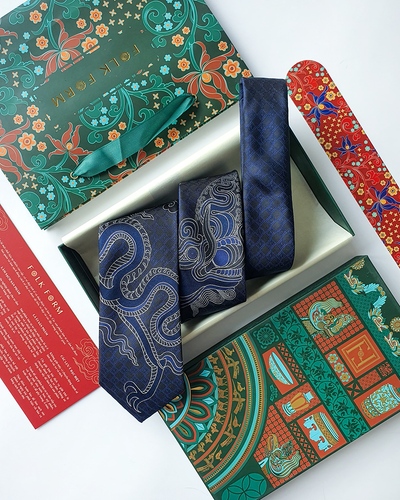
A tie is built in layers: the silk shell, an interlining, and edges that are meant to stay softly rolled. Pressing a tie flat at home tends to put a hard crease along those edges. Care for our ties is dry cleaning, so a stubborn crease is a job for a cleaner who presses ties. The full routine is in our guide on how to clean a silk tie. Every tie in our silk necktie collection is woven jacquard in 100% mulberry silk, and the weave holds its shape well when it is untied and rested.
How to fold a silk scarf to avoid creases
The fold you choose for storage decides how much work you face later. Fewer, softer folds mean fewer lines.
How to fold a square silk scarf for a drawer
- Lay the scarf flat, face down.
- Place a sheet of acid-free tissue on top.
- Fold it in half, then in half again, so the tissue cushions each fold line.
- Store it flat, with nothing heavy stacked on top.
Rolling is gentler still. Roll the scarf loosely around a sheet of tissue or a cardboard tube and you will have almost no fold lines at all. A 36 inch (90 cm) or 44 inch (110 cm) square benefits most from rolling because its folds are longer. Our silk scarf size guide explains how each size wears.

How to fold a silk neck scarf or a scarf for men
Fold the square corner to corner into a triangle, then fold from the long edge toward the point in bands about two inches wide. Tie it, loop it or tuck it into an open collar, and unfold it at night so the bands do not set.
How to fold a silk scarf for a gift
Fold it in half twice with tissue between the layers, so the motif sits centered on top when the lid comes off. Our step-by-step guide on how to wrap a silk scarf as a gift covers boxes, tissue and ribbon.
Keep wrinkles from coming back
Store scarves flat or rolled in tissue, away from sun, perfume and cosmetics. Untie them as soon as you take them off. When you travel, roll the scarf around a soft sweater instead of folding it into a corner of the case. Our guide on how to store a silk scarf goes deeper on drawers, hangers and display, and how to care for a silk scarf covers washing.

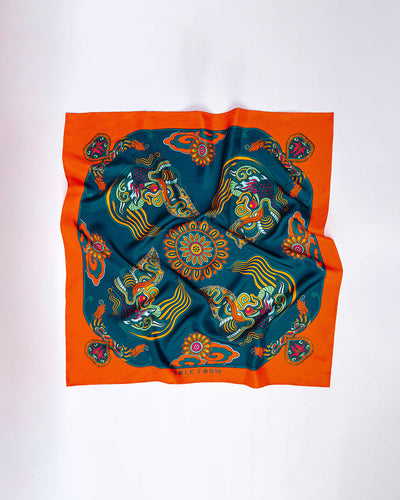
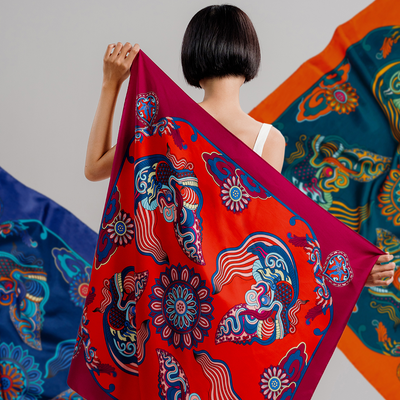
The scarves in our 36 inch silk scarf collection are mulberry silk, hand screen-printed through both faces in Hanoi, with edges rolled and stitched by hand. They respond well to all four methods above.
Frequently asked questions
Does mulberry silk wrinkle easily?
Mulberry silk creases when it is folded tightly or knotted for hours, though light creases usually fall out after a night on a hanger. Deeper folds release with steam or a gentle press on the lowest silk setting.
Can you steam real silk?
Yes. Hold a handheld steamer four to six inches from the fabric and move it slowly, keeping the head off the silk. Let the steamer heat fully before use so it does not spit water.
Can you iron real silk?
Yes, on the lowest silk setting, while the silk is still damp, on the reverse side, with a thin cotton cloth between the iron and the fabric. Stop short of the hand-rolled edges.
Can silk ties be ironed?
Pressing a tie at home tends to flatten its rolled edges. Hang or roll the tie overnight after untying it, and take stubborn creases to a dry cleaner, since silk ties are cared for by dry cleaning.
How do I get a crease out of a silk scarf quickly?
Hang it in a closed bathroom during a hot shower for 15 to 20 minutes, away from the spray. For a faster result, use a handheld steamer held several inches away.
How should I fold a square silk scarf so it does not crease?
Fold it in half twice with acid-free tissue between the layers, or roll it loosely around tissue or a tube. Rolling leaves the fewest lines, especially on 36 and 44 inch squares.
Browse every guide in our silk scarf and tie guides.