Jacquard vs Printed Silk Ties: How They Look, Feel and Wear
Trang DaoQuick answer: A jacquard silk tie has its pattern woven into the cloth from dyed silk yarns, so the design has texture and looks slightly different on the reverse. A printed silk tie starts as plain woven silk and the pattern is applied to the surface, so it feels smooth and flat. You can tell them apart by touch, by tilting the tie in daylight, and by looking inside.

Run a thumb across the blade of a woven tie and you feel the pattern before you see it: a faint ridge where a dot begins, a smoother patch where the ground weave takes over. On a printed tie the same thumb slides across one even surface. That small difference in the hand tells you most of what you need to know about how the tie was made.
What is a jacquard silk tie?
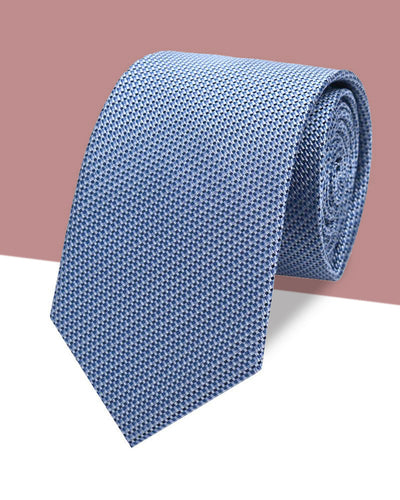
A jacquard silk tie is a tie cut from silk cloth woven on a jacquard loom, where the pattern is formed by the threads themselves. All woven cloth has warp threads running along its length and weft threads crossing from side to side. A jacquard mechanism can raise each warp thread on its own, which lets the weaver place color and texture almost anywhere on the cloth. Dots, stripes, checks and whole dragons can be drawn in yarn.
Because the yarn is dyed before weaving, each color in the design is a separate thread. Look closely at the edge of a woven dot and you will see it is built from tiny steps, following the grid of the threads. Areas where threads float over several others catch the light, and tighter areas stay matte, so a woven pattern shifts in sheen as the wearer moves. The longer story of the loom and the tie construction is in our guide to how silk ties are made.
What is a woven silk tie?
A woven silk tie is the everyday name for the same thing: a tie whose pattern, or texture, comes from the weave. Some woven ties are a single color and get all their interest from structure, such as a fine grenadine-style mesh, a raised dot or a diagonal twill rib. Others combine several colored yarns into a figured pattern. In both cases nothing has been printed on top.

What is a printed silk tie?
A printed silk tie is made from silk that is woven plain, often as a smooth twill, and then printed with dye, by screen or by digital printer. The design sits on the face of the fabric. Printing makes fine detail and soft color blends easy to achieve, so printed ties often carry paisleys, florals, small repeating motifs called foulards, and pictorial designs that would be difficult to weave.
A printed tie is usually lighter in the hand and ties a slightly smaller knot. The surface reads as flat color, with an even sheen across the whole blade.
Jacquard vs printed silk ties side by side
Both are traditional ways to make a good silk tie, and both can be 100% silk. The table below sets out what changes between them.
| What to compare | Jacquard (woven) silk tie | Printed silk tie |
|---|---|---|
| How the pattern is made | Dyed yarns woven into the design | Dye applied to plain woven silk |
| Surface | Textured, with glossy and matte areas | Smooth and even |
| Pattern edges up close | Small steps that follow the thread grid | Smooth lines, fine detail possible |
| Reverse of the cloth | Pattern visible, often in different colors | Paler or plain |
| Typical weight | Denser, fuller knot | Lighter, neater knot |
| Typical designs | Dots, stripes, checks, textures, woven motifs | Paisley, florals, foulards, pictures |
| Season and setting | Business, weddings, cooler months | Spring and summer, relaxed tailoring |
How to tell if a silk tie is woven or printed
These checks work in a store or at home, and none of them harms the tie.
- Feel the face. Close your eyes and draw a fingertip across the pattern. A woven design has relief; a print feels like one continuous surface.
- Tilt it toward a window. On a jacquard, parts of the pattern brighten while others dim as the angle changes. A printed tie changes sheen evenly across the whole blade.
- Look inside. Turn the wide end over and open the back seam gently with a finger near the tip. If you can see the reverse of the outer silk, a woven tie shows the pattern again, often with colors swapped, while a printed tie shows a paler or blank back.
- Study one edge. With a magnifier or a phone camera zoomed in, a woven edge looks like a staircase of threads. A printed edge is a smooth line, sometimes with a soft halo of dye.
- Read the label. It should name the fiber. "100% silk" or "100% mulberry silk" tells you the material; the words "woven" or "jacquard" tell you the method.

How each type wears over time
Construction and care matter more to a tie's life than the method of patterning. A well-cut tie with a good inner layer, untied properly after each wear and hung or rolled to rest, will hold its shape for years whether it is woven or printed.
There are a few differences worth knowing. On a woven tie the color is in the yarn, so the pattern and the cloth age together. On a printed tie the design sits at the surface, so heavy rubbing at the knot over many years can soften the print in that spot. Both kinds of silk are affected by long exposure to light, which yellows and weakens silk, so store ties away from a sunny window. Folk Form ties are cleaned by dry cleaning, and our guide on how to clean a silk tie covers spots and storage in detail.
Which one should you choose?
Choose a jacquard silk tie when you want a tie that reads well across a room and up close: texture gives a solid navy or gray real depth under office light, and a fuller knot holds its shape through a long day. It is the natural choice for business suits, weddings and gifts meant to be kept.
Choose a printed tie when the design itself is the point, such as a detailed floral or a picture that weaving could not render, or when you want a lighter tie for warm weather. Many men own both.
If you are buying it as a gift
When you do not know his closet well, a woven tie in navy, gray or a deep red with a small geometric pattern is the safe choice: it sits with a navy suit, a gray suit and a blazer, and a white or pale blue shirt. Before you pay a silk price, check two things on the listing: the fiber line should read "100% silk" or "100% mulberry silk", and the method should say woven or jacquard. Then picture the moment he opens the box, lifts the tie to the light and sees the pattern shift as it turns. For help with width, length and color, see how to choose a silk tie.

Folk Form ties are woven jacquard, in mulberry silk
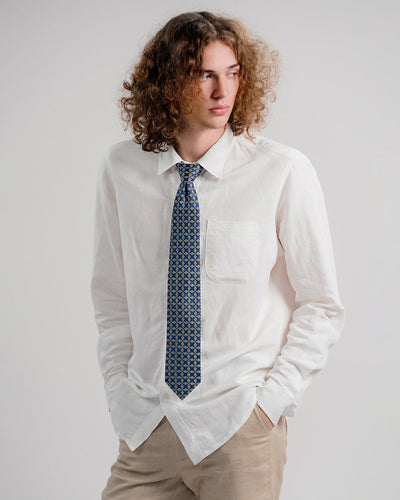
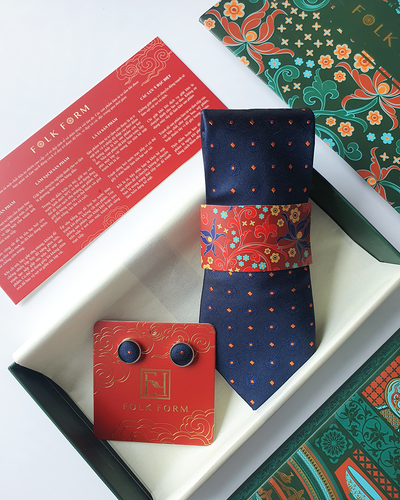
Every Folk Form tie is 100% mulberry silk, woven jacquard. We do not make printed ties. Most are cut 3.1 in (8 cm) wide for standard lapels, with a narrower 2.4 in (6 cm) option for slim ones, as on the red dot grid tie in 6 cm.
The geometric designs, such as the dark blue line pattern tie, carry no symbolic meaning; they are chosen for how they sit against a shirt and jacket, and they are $142. The dragon ties are $167 and carry the Ly dynasty dragon, a symbol of strength, wisdom and success, explained in our piece on the Ly dynasty dragon in menswear. The full range is in our silk ties for men, and every order arrives in a gift box with no price inside.

Where are Folk Form's printed silk scarves made?
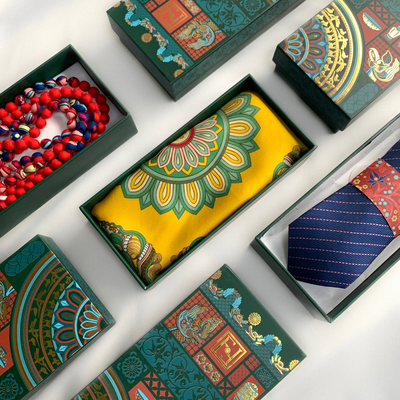
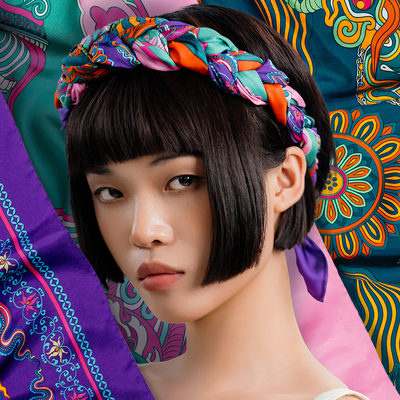
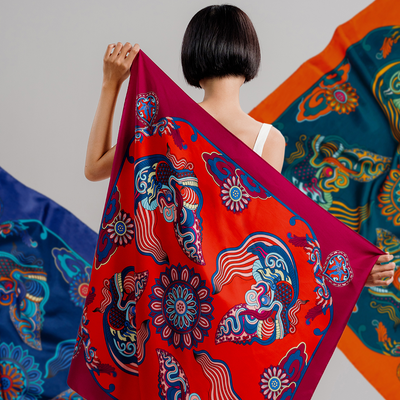
Printing belongs to our scarves. Each silk scarf is made in our Hanoi atelier, hand screen-printed through both faces, one screen for each color, with edges rolled and stitched by hand. If you are weighing screen printing against digital printing for a scarf, read hand screen-printed vs digitally printed silk scarves. Men who want a printed silk piece alongside a woven tie often start with a scarf worn at the neck or in a jacket pocket, covered in how a man can wear a silk scarf.
Frequently asked questions
Is a jacquard tie better than a printed tie?
Neither method is better in itself. A jacquard tie has woven texture and a fuller knot, while a printed tie allows finer pictorial detail and a lighter feel, so the right choice depends on the outfit and the season.
Is a jacquard tie always silk?
No. Jacquard describes the weaving method, and jacquard ties are also made from polyester and other fibers. Check the label for "100% silk" or "100% mulberry silk".
How can I tell a woven tie from a printed one without a label?
Feel the surface for texture, tilt the tie toward daylight to see whether parts of the pattern change sheen, and look at the reverse of the outer cloth inside the tip. A woven tie shows the pattern on the back; a printed tie looks paler or plain.
Do printed silk ties fade faster than woven ones?
Both kinds of silk yellow and weaken under long exposure to light. A printed design sits at the surface, so years of rubbing at the knot can soften it in that spot, while a woven pattern ages with the cloth.
Can a jacquard silk tie be washed at home?
Folk Form ties are dry cleaned, never washed. Water can distort the inner layer and the shape of the blade.
Does Folk Form sell printed silk ties?
No. Every Folk Form tie is woven jacquard in 100% mulberry silk, at $142 for geometric designs and $167 for dragon designs.
What width is a Folk Form tie?
Folk Form ties are 3.1 in (8 cm) wide as standard, a width that sits well with ordinary suit lapels. A narrower 2.4 in (6 cm) version is made for slim lapels.
Browse every guide in our silk scarf and tie guides.