How to Choose a Silk Tie: Width, Length, Pattern and Color
Dung DaoQuick answer: To choose a silk tie, match the width to your lapels (about 3.1 inches, or 8 cm, for most suits and 2.4 inches, or 6 cm, for slim ones), check that the length lets the tip reach your belt, pick a color darker than your shirt, and choose a pattern smaller or larger than the one on your shirt. Then check the label for 100% silk and the construction for a firm, even knot.

Stand at a tie rack and run two ties through your fingers. One slides like plastic and springs back flat. The other has weight, a dry, dense hand, and when you pinch it into a knot it holds the dimple without being coaxed. That second tie is the one to look for, and this guide shows how to recognize it, then how to pick the width, length, color and pattern that suit the man wearing it.
Why choose a silk tie?
Silk is the traditional fabric for neckties because it combines strength with light weight, takes dye with depth, and ties a knot that sits neatly at the collar. A good silk tie holds its shape through years of knotting and unknotting. Polyester ties can look similar on a hanger, yet they tend to knot bulkier, slip loose more easily, and show a flat, even shine rather than the shifting sheen of silk.
Are silk ties good? A well-made one is the standard against which other ties are judged, and it is pleasant to wear: the fabric is light at the throat, and a silk knot sits small and tidy under a collar. For the full making process, see how silk ties are made.
Step 1: Choose the width
Tie width is measured across the widest part of the blade, near the tip. The simplest rule: match the tie to your jacket lapels at their widest point, and to your build. A wide tie on narrow lapels looks heavy. A narrow tie on wide lapels looks lost.
| Width | Centimeters | Suits | Typical occasions |
|---|---|---|---|
| 3.1 in | 8 cm | Standard lapels, most builds | Office, weddings, interviews, ceremonies |
| 2.4 in | 6 cm | Slim lapels, slim-cut suits, slighter builds | Contemporary suits, cocktail events, younger style |
At Folk Form, 3.1 inches (8 cm) is our standard width and 2.4 inches (6 cm) is cut for narrow lapels. If you are buying for someone else and do not know his suits, choose 3.1 inches. It works with the widest range of jackets and shirt collars.

The red dot grid tie in 2.4 inches shows the slimmer profile. It pairs well with a narrow-lapel suit and a point or semi-spread collar.
Step 2: Check the length
A tie is the right length when, knotted, its tip touches the top of the belt buckle or sits just at the waistband. Our ties measure 57 inches (145 cm) long, a common length for men of average height wearing a four-in-hand or half Windsor knot.
- Taller men, or larger knots. A full Windsor uses more length. If the tip lands above the belt, switch to a four-in-hand, which uses the least fabric.
- Shorter men. If the tip falls past the belt, a half Windsor or a double four-in-hand takes up extra length neatly.
- The back blade. The narrow end should sit behind the front blade and slip into the keeper loop. If it shows below the front, retie with the narrow end shorter at the start.
Our step-by-step guide to how to tie a tie walks through each knot.
Step 3: Choose the color
Most men are well served by a tie darker than the shirt. Darker ties anchor the chest and look composed in photographs. A few colors do most of the work in a wardrobe:
| Tie color | Works with | Good for |
|---|---|---|
| Navy and dark blue | White, light blue, pink shirts; gray, navy, charcoal suits | Office, interviews, a man who owns a single tie |
| Burgundy and deep red | White and light blue shirts; navy and gray suits | Evening events, holidays, weddings |
| Bright red | White shirts; navy and charcoal suits | Holiday parties, celebrations, presentations |
| Gray and silver | White, light blue, lavender shirts | Daytime weddings, formal ceremonies |
| Green and gold tones | White and cream shirts; brown, tan, gray suits | Autumn, smart casual, country weddings |
| Pastels | White shirts; light gray and tan suits | Spring and summer daytime events |
Read the room as well as the shirt. A conservative office favors navy, burgundy and gray. A celebration welcomes brighter red, pink and gold. For wedding colors in detail, see our sibling guide on what tie to wear to a wedding.

Step 4: Choose the pattern
Pattern is where a tie shows character. The rule for mixing is scale: if the shirt has a pattern, choose a tie pattern clearly larger or smaller than it, so the two do not blur together at a distance.
Solids and woven textures
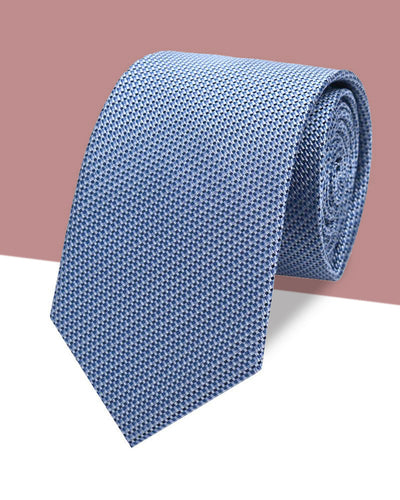
A solid or near-solid tie, especially one with a woven texture such as a raised mesh or fine twill, goes with every shirt. In silk jacquard, even a single-color tie has visible depth, because the weave creates glossy and matte areas.
Dots
Small dots, micro dots and dot grids are among the most versatile patterns. The smaller the dot, the more formal the tie reads. Larger, spaced polka dots feel more relaxed.
Stripes
Diagonal stripes are a long-standing office pattern. Thin, close stripes read formal; broad, contrasting stripes read bolder. Pair a striped tie with a solid or very finely checked shirt.
Checks and windowpanes
Checks, gingham and windowpane grids add structure. They pair cleanly with solid shirts and suits and give a tie a slightly sporting character.
Geometric patterns
Small repeating squares, lines and grid shapes are the workhorse of the tie wardrobe. At Folk Form, our geometric ties carry no symbolic meaning. They are chosen for how they wear and for the man receiving them.
Motif ties
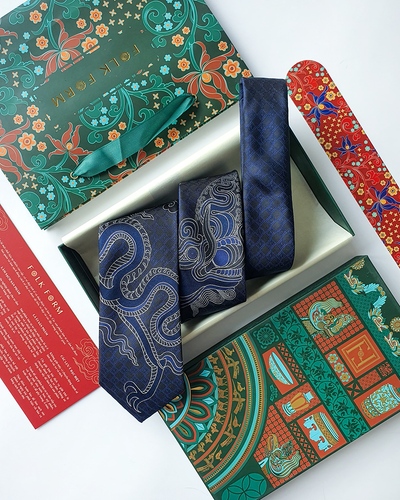
A motif tie carries an image with a story. Our dragon ties are woven with a dragon drawn from Vietnamese art, where the dragon is commonly read as strength, wisdom and success. For the history behind it, read about the Ly dynasty dragon and its place in menswear.

Step 5: Check the silk and the construction
The fear behind most tie purchases is paying a silk price for something that is not silk. Thirty seconds with the tie itself settles it.
- Read the label. Look for "100% silk" or the fiber named, such as mulberry silk. "Silk feel" and "satin" describe a surface, and satin is a weave that can be made from any fiber.
- Look at the pattern edge. On a woven jacquard tie, colors change thread by thread, and the pattern has slight relief. On a printed tie, color sits on a smooth surface.
- Drape it over your hand. A well-made tie falls straight and does not twist. A twist often means the fabric was cut off the bias.
- Tie a quick knot. It should hold a dimple and spring back without deep creases when untied.
- Turn it over. Look for a neat center seam, a bar tack holding the two blades together, and a keeper loop sewn straight.
Woven jacquard or printed silk?
Silk ties come in two families. A printed silk tie starts as plain woven silk with the pattern applied afterward, which gives crisp detail and a lighter hand. A woven jacquard tie carries its pattern in the structure of the cloth, made from colored yarns, which gives texture, depth and a firm knot. Every Folk Form tie is woven jacquard in 100% mulberry silk. We do not make printed ties. For a side-by-side look, read jacquard vs printed silk ties.
Are silk ties shiny?
Silk ties have a natural sheen, and how much depends on the weave. Satin weaves look glossy. Twills, textured weaves and grenadine look more matte. Woven jacquard falls in between, with glossy and matte areas side by side, so the pattern seems to move as the light changes. If you prefer a quieter tie for the office, choose a tight, textured weave in a dark color.
Do silk ties wrinkle, and how do you care for one?
Silk ties crease where they are knotted, and the creases usually relax on their own. Untie the knot fully at the end of the day by reversing the steps, never by pulling the narrow end through. Then hang the tie over a rail or roll it loosely and leave it to rest for a day before wearing it again.
Silk ties are cleaned by dry cleaning alone. Do not wash a silk tie in water, and do not iron it at home: pressing flattens the rolled edges that give a tie its shape. Leave stains and pressing to a dry cleaner who handles silk, and point out the stain when you drop it off. Our full guide on how to clean a silk tie covers spills and storage.
Is a silk tie black tie?
In the traditional sense, black tie means a dinner jacket or tuxedo with a black bow tie, so a long necktie is not the classic choice for a black tie dress code. Many hosts accept a dark, plain silk necktie at events marked "black tie optional" or "formal." Check the invitation and, when in doubt, ask the host.
Choosing a silk tie as a gift
A silk tie is one of the easier gifts to get right, because width and length are standard and the guesswork comes down to color and pattern. A few rules lower the risk:
- Look at what he already wears. If his ties are mostly navy, a navy tie with a new pattern is safer than a bright color.
- Choose 3.1 inches unless his suits are slim. It suits most jackets.
- Match the season. For Christmas or a winter birthday, burgundy, deep green and navy look at home under indoor light; for Father's Day or a June graduation, lighter blues and grays.
- Pick a pattern with a reason. A dragon tie for a promotion or a new business, a geometric tie for a man who prefers quiet style.
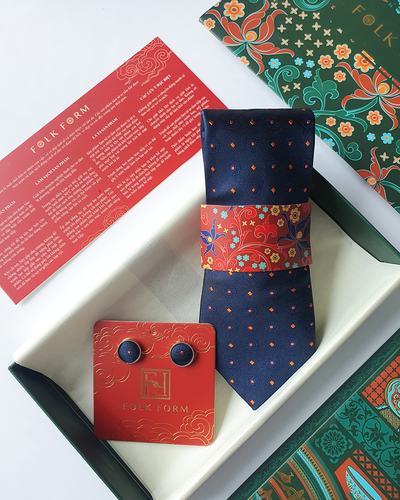
- Consider a set with cufflinks. Our tie and cufflink sets need shirts with French cuffs, the folded-back cuff fastened with a link. Check his shirts before choosing one.

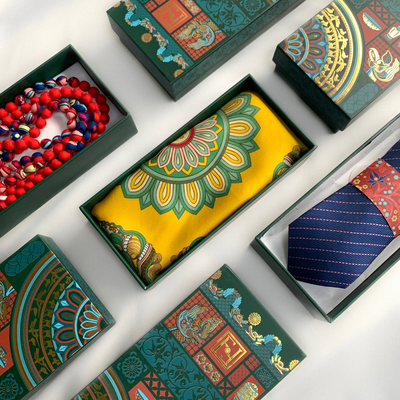
Our ties are $142, including tie and cufflink sets, and our dragon ties are $167. Every order arrives in a gift box with no price inside, so you can ship straight to him. You can browse the full range in our silk tie collection or see more ideas in silk gifts for him.
Frequently asked questions
What width silk tie should I buy?
Choose 3.1 inches (8 cm) for standard lapels and most builds. Choose 2.4 inches (6 cm) for slim lapels and slim-cut suits.
How long should a tie be?
Knotted, the tip should touch the top of the belt buckle. A 57 inch (145 cm) tie suits most men of average height with a four-in-hand or half Windsor knot.
Are silk ties worth it?
A well-made silk tie knots more neatly, holds its shape longer and shows more depth of color than most synthetic ties. With dry cleaning and careful untying, it can be worn for many years.
Do silk ties wrinkle?
They crease at the knot, and the creases usually relax overnight if the tie is untied properly and hung or rolled loosely. Do not iron a silk tie at home.
How do you clean a silk tie?
Silk ties are cleaned by dry cleaning alone. Take stains to a dry cleaner who handles silk and point the stain out when you drop the tie off.
What color tie goes with everything?
Navy is the most adaptable tie color. It works with white, light blue and pink shirts and with gray, navy and charcoal suits.
What is the difference between a jacquard and a printed silk tie?
A jacquard tie has its pattern woven into the cloth from colored yarns, which gives texture and a firm knot. A printed tie has the pattern applied to the surface of plain silk.
Browse every guide in our silk scarf and tie guides.