How to Clean a Silk Tie: Stains, Dry Cleaning and What Never to Do
Trang DaoQuick answer: Clean a silk tie by taking it to a dry cleaner who handles silk. Never wash a silk tie by hand or in a machine, because water can shrink and distort its layers. For a fresh stain, lift off any solids, blot gently with a clean white cloth without rubbing, and get the tie to a cleaner soon, telling them what the stain is.

A drop of red wine lands just below the knot during a toast. The reflex is to grab a wet napkin and scrub. Put the napkin down. What you do in the next minute matters more than anything a cleaner can do later.
Can silk ties be washed?
No. Silk ties are meant to be dry cleaned, never washed by hand or in a washing machine. Every tie in our silk necktie collection carries the same care instruction: dry clean.
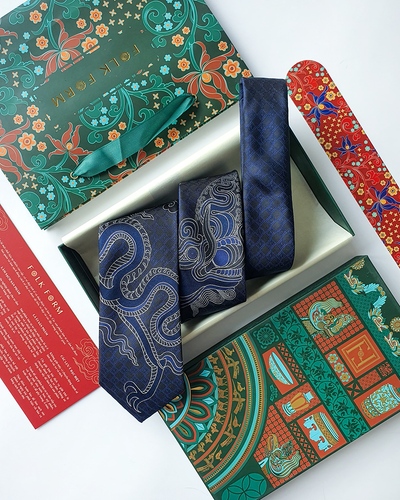
The reason is construction. A tie is built in layers: a silk outer shell folded around an inner layer that gives it body, all stitched together. Water can make these layers shrink and relax at different rates, so a washed tie can come out puckered, twisted or shorter on one side. The softly rolled edges can flatten, and dyes in a woven pattern can bleed into neighboring threads. Our article on how silk ties are made shows each layer.
What to do when you stain a silk tie
- Lift off anything solid. Use the blunt edge of a spoon or a butter knife to lift food away from the silk, moving toward the center of the spot.
- Blot, do not rub. Press a clean, dry white cloth or paper napkin onto the stain to draw up liquid. Rubbing pushes the stain deeper and can chafe the surface of the silk, leaving a pale, fuzzy patch that no cleaner can repair.
- Skip the water, soda and salt. Home remedies often leave a ring on silk that is harder to remove than the original mark.
- Take it to a cleaner within a day or two. Fresh stains are easier to lift than old ones, and heat from wearing or ironing can set them.
- Tell the cleaner what it is. Wine, coffee, oil and ink each need a different treatment, and knowing the source helps them choose.
Are silk tie cleaning wipes and stain remover pens safe?
Treat them with caution. Most wipes and pens are made for sturdier fabrics and can leave a water mark or a faded spot on silk. If a product does not say it is safe for silk, leave it in the bag and let a professional handle the tie.

How to choose a dry cleaner for a silk tie
Ask whether the shop cleans ties regularly and how they press them. A good tie cleaner keeps the edges rolled and avoids a hard crease down each side. Ask for a light press or a steam finish if the tie just needs freshening, and point out the stain when you drop the tie off.
A tie does not need cleaning after every wear. Many men have a tie cleaned when it is stained or after a long season of wear. Less cleaning keeps the colors and the hand of the silk closer to new.
Silk tie wrinkles: ironing and steaming
Silk ties wrinkle at the knot, and most creases come from leaving the tie knotted overnight. Undo the knot each evening by working it back in the reverse order you tied it, instead of pulling the narrow end through. Pulling stretches the inner layers and twists the tie over time.
After untying, drape the tie over a rack or roll it loosely from the narrow tip and set it in a drawer. By the next day, most knot creases have relaxed. Resting a tie for a day between wears gives it time to recover.
Can silk ties be ironed?
Ironing a silk tie at home is risky. The iron flattens the rolled edges into sharp lines, and heat can leave a shine on the silk. Stubborn creases are a job for your dry cleaner.
Can silk ties be steamed?
Many people steam silk ties at home with a handheld steamer held several inches away, keeping the head off the fabric. If you try it, test on the back of the narrow end, let the steamer heat fully so it does not spit water, and hang the tie to dry before wearing or rolling it. When in doubt, the cleaner is the safer choice. Our guide on how to remove wrinkles from silk covers steam in more detail.
| Situation | Do | Avoid |
|---|---|---|
| Fresh spill | Lift solids, blot with a white cloth, see a cleaner soon | Rubbing, water, soda, salt |
| General grime | Professional dry cleaning | Hand washing, washing machine |
| Knot creases | Untie in reverse, hang or roll overnight | Pulling the narrow end through the knot |
| Stubborn wrinkles | Ask the cleaner for a light press with rolled edges | Home ironing on high heat |
| Storage | Hang on a rack or roll loosely in a drawer, out of sun | Leaving it knotted, crushing it in a bag |
How to store a silk tie
Hang ties on a tie rack or a smooth hanger, or roll them loosely and set them side by side in a drawer. Keep them away from direct sun: long exposure to light yellows and weakens silk. Pack ties for travel rolled inside a pair of socks or a small case, so the shape holds. The same habits keep scarves bright, as we explain in how to store a silk scarf.

Why woven jacquard ties need a careful hand
All of our ties are woven jacquard in 100% mulberry silk; we do not make printed ties. In a jacquard, the pattern is formed by the threads themselves, so the dots, squares and dragons sit in the structure of the fabric. That gives the tie depth and a fine texture you can feel with a fingertip, and it is also why aggressive rubbing or a wet scrub can rough up the surface. Pieces like our red windowpane silk tie come in the standard 3.1 inch (8 cm) width, with 2.4 inch (6 cm) options for slim lapels. If you are still choosing, our guide on how to choose a silk tie walks through width, pattern and occasion.

What about silk scarves?
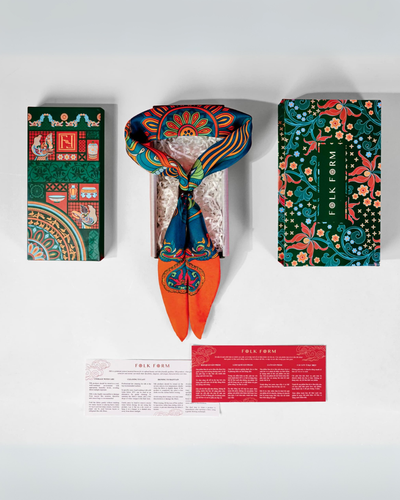
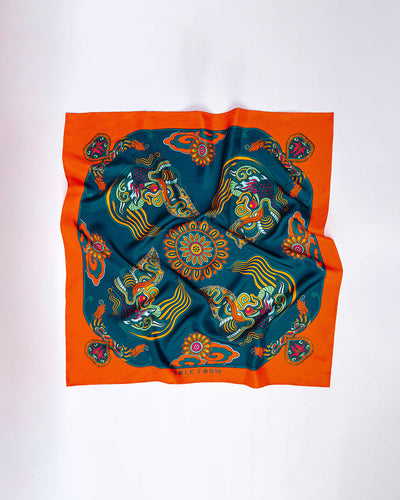
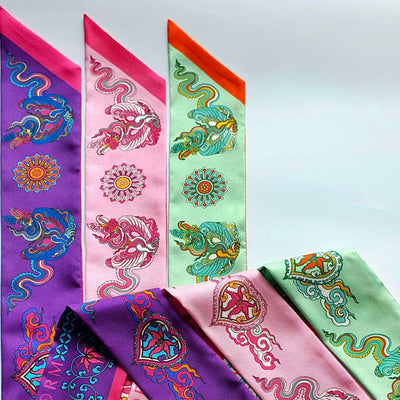
Silk scarves follow different rules from ties because a scarf is a single layer of silk. For our printed silk scarves, the care card reads: cold water, shampoo or body wash, no wringing, dry flat in the shade, and iron on the lowest silk setting while damp. Dry cleaning is the safest route. Skip chlorine bleach and enzyme detergents; enzymes digest protein, and silk is a protein fiber. Our guide on how to wash a silk scarf by hand takes you through each step, and the same method applies to a silk twilly.
Frequently asked questions
Can you put a silk tie in the washing machine?
No. A washing machine can shrink and twist the layers inside a tie and flatten its rolled edges. Silk ties should go to a dry cleaner.
How do I get a stain out of a silk tie?
Lift off any solids, blot the spot gently with a clean white cloth without rubbing, and take the tie to a dry cleaner within a day or two. Tell them what caused the stain.
Can I hand wash a silk tie?
Hand washing carries the same risk as the machine, because water affects the shell and the interlining differently. Dry cleaning is the care method for silk ties.
How often should a silk tie be dry cleaned?
Clean a tie when it is stained or visibly tired, not after every wear. Less frequent cleaning keeps the color and texture closer to new.
How do I get wrinkles out of a silk tie?
Untie it in reverse order, then hang it or roll it loosely overnight. For stubborn creases, ask a dry cleaner for a light press that keeps the edges rolled.
Can a silk scarf be washed?
Printed silk scarves can be washed in cold water with shampoo or body wash, without wringing, then dried flat in the shade. Dry cleaning remains the safest option.
Browse every guide in our silk scarf and tie guides.