How Are Silk Ties Made? Woven Jacquard, Cut and Sewn Explained
Minchu NguyenQuick answer: A silk tie starts as silk filament reeled from cocoons and twisted into yarn. The yarn is dyed, then woven into cloth, and in a woven jacquard tie the pattern is built into the weave thread by thread. The finished cloth is cut into shaped panels, joined, folded around an inner layer for body, and closed with a seam down the back.

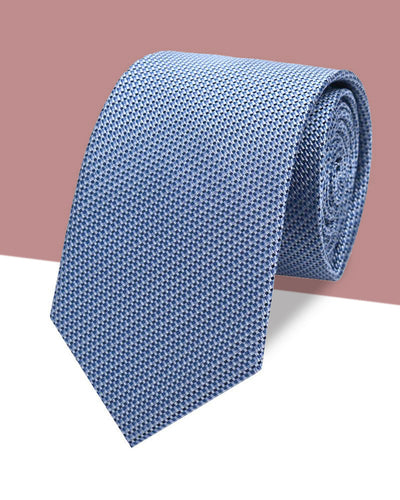
Hold a woven silk tie close to a window and tilt it. The dragon or the dot grid shifts from bright to muted as the light moves, because the pattern is made of threads lying in different directions. That small shift of sheen is the clearest sign of how the tie was made, and it is worth understanding before you buy one or give one.
What is a silk necktie?
A silk necktie is a tie whose outer fabric is woven from silk yarn. The label should say "100% silk" or name the fiber, such as mulberry silk. Many ties sold as "silk feel" or "satin" are polyester, and satin describes a weave, which can be made from any fiber. Every Folk Form tie is 100% mulberry silk, woven jacquard.
Step 1: From cocoon to silk yarn
Mulberry silk is a natural protein fiber. The silkworm spins it from a protein called fibroin, held together by a gum called sericin that is mostly washed out during processing. Each cocoon is wound from one continuous filament that runs for hundreds of yards. Several filaments are reeled together into raw silk thread, and threads are then twisted into yarn strong enough for the loom. For the full journey, see our guide to how silk is made, from cocoon to scarf.
For a woven tie, the yarn is usually dyed before weaving. Each color in the finished pattern is a separate yarn, which is why a jacquard tie with three colors in its design carries three sets of colored threads through the cloth.
Step 2: Weaving the pattern on a jacquard loom
All woven cloth has two sets of threads. The warp runs the length of the fabric, and the weft crosses it from side to side. On a simple loom, warp threads are lifted in fixed groups, which can produce plain weaves, stripes and twills. A jacquard mechanism can lift each warp thread on its own. That freedom lets the weaver place color and texture almost anywhere, so a dragon, a lotus or a fine dot can be drawn directly in thread.
Modern jacquard looms read the design as a digital file. The pattern exists as a set of instructions for which threads rise on each pass of the weft, and the loom follows it line by line until the dragon or the dot grid appears in the cloth.
Because the pattern is woven, it has relief. Areas where threads float over several others catch light and look glossy. Tighter areas look matte. This is where a silk tie gets its depth, and it is why the same tie looks different under office light, candlelight and daylight.

Woven jacquard and printed silk ties compared
Silk ties come in two broad families. A printed tie starts as plain woven silk, and the pattern is applied to the surface afterward. A woven jacquard tie carries its pattern in the structure of the cloth. Both are legitimate ways to make a tie, and they look and wear differently.
| Feature | Woven jacquard tie | Printed silk tie |
|---|---|---|
| Where the pattern lives | In the weave, made of colored yarn | On the surface of plain woven silk |
| Up close | Individual threads change color at the pattern edge | Smooth color over a uniform weave |
| Texture | Raised, with glossy and matte areas | Flat and even |
| Typical feel | Denser hand, holds a firm knot | Lighter hand, softer knot |
| At Folk Form | Every tie, $142 or $167 for dragon ties | Not offered |
Our sibling guide on jacquard vs printed silk ties goes deeper on how each wears over years.
Step 3: How a tie is cut and sewn
Once the cloth is woven and finished, the tie maker cuts it into long shaped pieces: a wide blade for the front, a narrow tail for the back, and often a neck piece joining the two. The pieces are sewn end to end. Most ties then get an inner layer that gives body and helps the knot hold its shape. The silk is folded around the inner layer and closed with a long seam on the back. A keeper loop, which holds the narrow end in place, and the label go on last.
Construction methods vary from maker to maker, so the useful checks are the ones you can do in your hands:
- Drape it over your hand. A well-made tie hangs straight from the middle without twisting.
- Look at the face in daylight. On a woven tie you can see threads changing color where the pattern begins.
- Tie a knot. The knot should form a clean shape and loosen again without leaving a deep crush.
- Read the label. It should name the fiber, ideally "100% silk" or "100% mulberry silk".

Folk Form ties: widths, patterns and what they mean
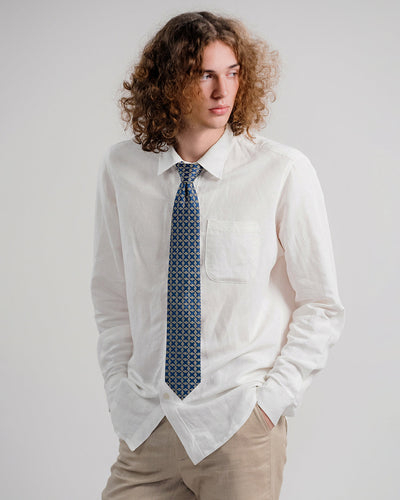
Every Folk Form tie is 100% mulberry silk, woven jacquard. The standard width is 8 cm (3.1 in), which suits most suit lapels. A 6 cm (2.4 in) width is made for slim lapels, as on the red dot grid tie.
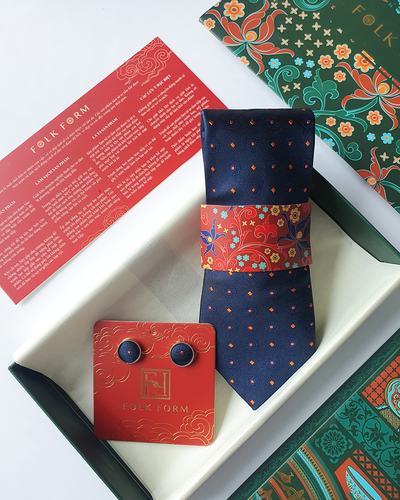
The geometric ties, such as the red windowpane tie, carry no symbolic meaning. They are chosen for how they sit with a shirt and jacket, and for the man who will wear them. These are $142. The dragon ties carry the Ly dynasty dragon, a symbol of strength, wisdom and success, and are $167. The story behind that dragon is in the Ly dynasty dragon and its place in menswear. Tie sets with cufflinks need a shirt with French cuffs.
If you are buying for someone else and do not know his lapels, choose the 3.1 inch width, the standard that suits most suit lapels. For an everyday tie, a geometric pattern in navy or red goes with a white or light blue shirt and covers office days, weddings and dinners. Choose the dragon when the tie marks a promotion, a graduation or a new role, and the meaning is part of the gift.

Are silk ties worth it?
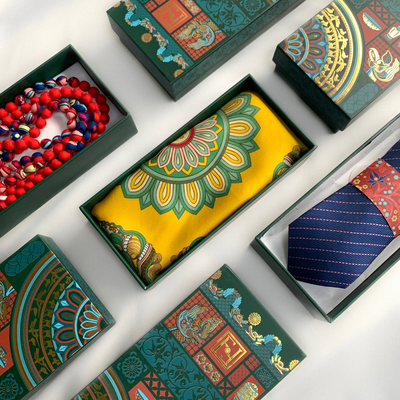
A silk tie costs more than a polyester one: silk filament is costly to produce, and a jacquard pattern has to be designed thread by thread before weaving begins. What you get for it is visible: depth of color, a pattern that moves with the light, and a knot that forms cleanly. For a man who wears a tie a few times a month, or for a gift meant to be kept, that is a reasonable trade. Picture the moment it is opened: he runs a thumb across the weave, feels the slight ridge of the pattern, and tilts it toward the lamp to watch the sheen move. Our silk tie gift guide covers choosing one for someone else. Every order arrives in a gift box with no price inside.
Caring for a woven silk tie
Clean Folk Form ties by dry cleaning. Between wears, untie the knot fully, never by pulling the narrow end through, and hang the tie or roll it loosely so the creases from the knot can relax. If a tie gets wet, blot it gently with a clean cloth and let it air dry, then leave any cleaning to a dry cleaner. Step-by-step care is in how to clean a silk tie.
Frequently asked questions
How are silk ties made?
Silk filament is reeled from cocoons, twisted into yarn, dyed and woven into cloth. The cloth is cut into shaped pieces, sewn together, folded around an inner layer and closed with a seam on the back.
What does jacquard mean on a tie?
Jacquard means the pattern is woven into the fabric on a loom that can lift each warp thread on its own. The design is made of colored yarn crossing in the cloth.
Are silk ties shiny?
Silk has a natural sheen, and woven ties show it unevenly by design. Glossy areas sit beside matte ones, so the tie looks richer than flat shine.
Do silk ties wrinkle?
Yes, the knot leaves creases. Untie it fully after wearing and hang or loosely roll the tie so the silk can relax.
Can silk ties get wet?
Water can leave marks on silk. If a tie gets wet, blot it with a clean cloth, let it air dry, and leave cleaning to a dry cleaner.
Does Folk Form sell printed silk ties?
No. Every Folk Form tie is 100% mulberry silk, woven jacquard.
How much does a silk tie cost at Folk Form?
Geometric pattern ties are $142, and the woven dragon ties are $167.
Browse every guide in our silk scarf and tie guides.