How Silk Is Made: From Cocoon to a Hand-Rolled Scarf
Dung DaoQuick answer: Silk is made by the domesticated silkworm, which feeds on mulberry leaves and spins its cocoon from one continuous filament. The cocoons are softened in hot water, unwound and reeled into raw silk thread, then twisted into yarn, woven into cloth and degummed to remove most of the natural gum. For a scarf, the cloth is then printed, cut and finished, with the edges rolled and stitched by hand.

Lay a finished 36 inch silk square on a table and run a fingertip along the rolled edge. The roll is plump and slightly uneven where the needle went in, the color runs right to the fold, and the whole square weighs about 2 ounces. Behind those few grams sits a chain of work that starts with a caterpillar and a mulberry leaf. Here is that chain, step by step, with the parts we do ourselves marked clearly.
What is real silk made of?
Mulberry silk is a natural protein fiber. The silkworm spins it from a protein called fibroin, held together by a gum called sericin that is mostly washed out during processing. Inside the silkworm, two glands produce the liquid silk, which leaves the head through a single opening called the spinneret. It meets the air as two fine strands of fibroin bound by sericin into one filament.
That filament is what makes reeled silk different from almost every other natural fiber. Cotton, wool and linen come as short fibers that have to be spun together into yarn. Silk arrives as one long, unbroken thread. Museum references put a single cocoon filament at 250 to 750 meters, roughly 270 to 820 yards, and that length is the reason a fine silk thread can be so smooth and even.
What is the mulberry silkworm?
The mulberry silkworm, Bombyx mori, is the caterpillar of a moth that has been domesticated for thousands of years. It no longer lives in the wild. The adult moths cannot fly, and the caterpillars depend on people to bring them fresh leaves. Mulberry silk takes its name from this diet: silk from domesticated silkworms raised on mulberry leaves.

Which mulberry leaves do silkworms eat?
Silkworms are raised mainly on the leaves of the white mulberry tree, Morus alba, though other mulberry species are also used in some regions. Farmers pick the leaves fresh and spread them over trays where the caterpillars feed. The quality and freshness of the leaf matter a great deal, because everything the caterpillar spins is built from what it eats.
How silk is made, step by step
1. Raising the silkworms
The eggs hatch into tiny caterpillars that eat almost without pause. Over roughly four weeks they grow many times over, shedding their skin several times along the way. Sericulture, the craft of raising silkworms, is mostly about this stage: clean trays, fresh leaves, steady temperature and patience.
2. Spinning the cocoon
When the caterpillar is fully grown, it stops eating and begins to spin. Moving its head in a looping figure-eight pattern, it wraps itself in layer after layer of filament over a few days. Each cocoon is wound from one continuous filament that runs for hundreds of yards. Inside, the caterpillar becomes a pupa.
3. Stifling and sorting
If the moth were allowed to emerge, it would break through the cocoon and cut the filament into short lengths. For reeled silk, most cocoons are therefore treated with heat, steam or hot air before that happens. A share of cocoons is kept back to produce the next generation of eggs. The rest are sorted by size, shape and soundness; damaged or broken cocoons go to spun silk, which is made from shorter fibers.
4. Cooking and reeling
Next the cocoons are soaked in hot water to soften the sericin. Brushes catch the loose outer ends, and the reeler finds the true start of each filament. Because a single filament is too fine to use alone, several are drawn together and wound onto a reel as one thread. The softened sericin acts as a natural glue, bonding them into raw silk.
5. Throwing
Raw silk is then twisted, and often plied with other threads, into yarn strong enough to weave. This step is called throwing. The amount of twist shapes the final cloth: low twist gives a smooth, lustrous surface, while more twist gives the crinkled texture of fabrics such as crepe.
6. Weaving
On the loom, lengthwise warp threads are held under tension while crosswise weft threads pass over and under them. The pattern of that crossing decides the cloth. A plain weave gives a light, even fabric such as habotai. A twill weave shows fine diagonal lines. A satin weave floats threads over the surface for a glossy face, as our guide to silk vs satin explains. A jacquard loom lifts warp threads in programmed groups so the pattern itself is woven into the cloth.
7. Degumming
Raw silk still carries its sericin, which makes it stiff and dull. Washing it in a hot, mild solution removes most of that gum, either from the yarn or from the woven cloth. What remains is the fibroin: soft, fluid and luminous. The weight of the finished cloth is described in momme, and our guide to what momme means in silk shows how that number converts to grams.
8. Dyeing or printing
Silk takes color deeply because its protein structure binds dye well. Cloth can be dyed in a single color or printed with a design. In screen printing, color is pressed through a fine mesh screen, one screen for each color, and printed silk is usually steamed and washed afterward to fix the dye. Digital printing applies the design from a printer instead. The two methods look and wear differently, and our comparison of hand screen-printed and digitally printed silk scarves shows how to tell them apart.
9. Cutting and finishing
The printed cloth is cut into squares or strips, and the raw edges are finished. On a hand-finished scarf, the edge is rolled tightly between the fingers and held with small, even stitches. Machine hems lie flat; a hand-rolled edge is round and full, and it frames the print like a cord.
Who does what: the Folk Form chain
Buyers deserve to know which steps a brand performs and which it buys in. For our printed silk scarves, the chain looks like this:
| Stage | What happens | Who does it for a Folk Form scarf |
|---|---|---|
| Silkworm raising and reeling | Cocoons are grown, softened and reeled into raw silk | Upstream of our supplier; our mulberry silk yarn comes from Hangzhou |
| Throwing and weaving | Yarn is twisted and woven into cloth | Done before the silk reaches us; the fabric weight is set by our supplier's specification |
| Printing | The design is applied to the cloth | Our Hanoi atelier; hand screen-printed through both faces, one screen for each color |
| Edge finishing | The raw edge is rolled and sewn | Our Hanoi atelier; edges rolled and stitched by hand |
| Packing | Each piece is folded and boxed | Our Hanoi atelier; folded in tissue paper and set in a hard gift box |
The fiber is 100% mulberry silk. Hangzhou has been a silk city for centuries, and we name it plainly because we would rather you know where the yarn comes from. Everything you see and touch on the finished scarf, the print, the color on both sides and the rolled edge, is made in our Hanoi atelier. To see the result at full size, browse the 36 inch silk hair scarves.

Where is mulberry silk made?
Mulberry silk is produced wherever sericulture is practiced, and China produces the largest share of the world's raw silk. India is the other major producer, and smaller silk traditions continue across Asia, Vietnam among them. Within China, the region around Hangzhou has long been associated with silk.
Where is real silk made?
Real silk can come from any country with silkworms, reeling and weaving, and the fiber itself is the same wherever the cocoon was spun. What varies is the care at each step: how evenly the thread was reeled, how the cloth was woven and finished. A label that names the fiber, and a seller who names the place, tell you more than a vague phrase about origin. Our Vietnamese silk scarf guide covers how to check a scarf you are considering.
From cocoon to gift box

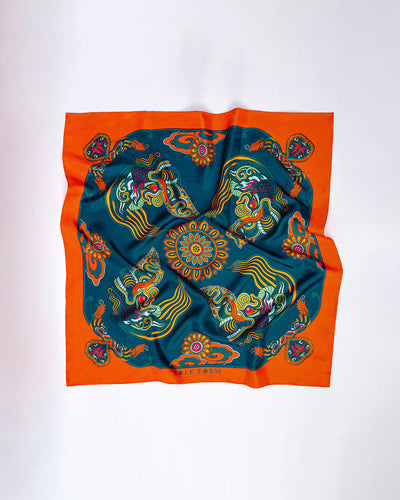
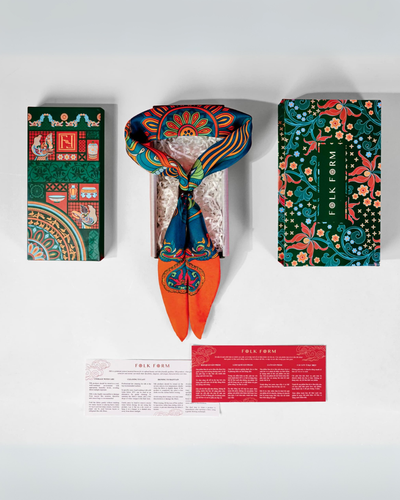
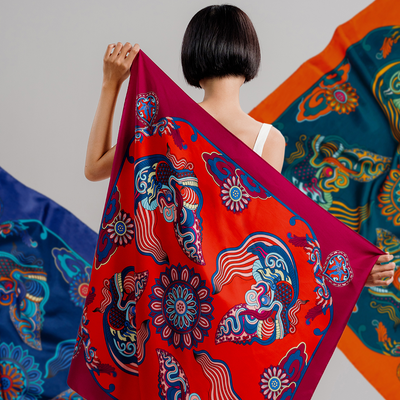
The final step happens at a packing table in Hanoi. The scarf is folded in tissue paper and set in a hard box, and every order ships in a gift box with no price inside. Picture the lid lifting on a kitchen counter in Ohio or a desk in Manhattan: the tissue parts with a soft rustle, and the silk in that box has already passed through a silkworm, a reel, a loom, a screen and a needle. For a giver, that chain is something to say in one line on the card. For the person who unfolds it, it is the reason the edge feels round under the thumb. A piece like the red Dragon Dreams 36 inch scarf shows the finished result at full size.
Frequently asked questions
How is silk made from silkworms?
Silkworms spin cocoons from a single long filament. The cocoons are softened in hot water, the filaments are unwound and reeled together into thread, and the thread is twisted, woven and degummed into silk cloth.
What is mulberry silk made of?
Mulberry silk is a natural protein fiber made mostly of fibroin. The gum that binds it, sericin, is mostly washed out during processing.
Why is it called mulberry silk?
It comes from the domesticated silkworm Bombyx mori, which is raised on mulberry leaves. The name refers to that diet.
How long is the thread in one cocoon?
Museum references put a single cocoon filament at 250 to 750 meters. Several filaments are reeled together to make one usable thread.
Where does Folk Form silk come from?
Our mulberry silk yarn comes from Hangzhou. Printing, hand-rolled edges and finishing are done in our Hanoi atelier.
How are silk scarves made?
Woven silk cloth is printed or dyed, cut into squares, and finished at the edges. On a hand-finished scarf, each edge is rolled between the fingers and stitched by hand.
What does degumming do to silk?
Degumming washes out most of the sericin, the natural gum around the filament. Raw silk is stiff and dull with that gum; after degumming, the fibroin left behind is soft, fluid and luminous.
Browse every guide in our silk scarf and tie guides.