Silk vs Satin Scarf: What the Difference Is and How to Tell
Minchu NguyenQuick answer: Silk is a fiber spun by the silkworm. Satin is a weave, a way of crossing threads that leaves long floats on the surface and gives the cloth a glossy face and a duller back. A satin scarf can be woven from silk, polyester or another fiber, so the word "satin" on a label describes the surface. The fiber content line tells you what the scarf is made of.

The confusion usually starts at a gift counter or a product page. Two scarves catch the light the same way, one costs four times the other, and both are called "silky." Knowing the difference between a fiber and a weave takes the guesswork out of that moment, and it takes about two minutes to learn.
Silk vs satin: fiber and weave
Every fabric answers two separate questions: what the threads are made of, and how they are woven together. Silk answers the question of material, and satin answers the question of weave. Mulberry silk is a natural protein fiber. The silkworm spins it from a protein called fibroin, held together by a gum called sericin that is mostly washed out during processing. That fiber can be woven many ways, and satin is one of them.
In a satin weave, each thread floats over several crossing threads before it dips under one. Those long floats lie flat and reflect light in one smooth sheet, which is why satin looks glossy on the face. Polyester, nylon and acetate can all be woven this way, and so can silk. The table below sorts the terms you will see on labels.
| Term | What it describes | Common fibers | Typical finish |
|---|---|---|---|
| Silk | Fiber | Silk from the silkworm | Depends on the weave; a soft luster that shifts with the light |
| Mulberry silk | Fiber | Silk from silkworms fed on mulberry leaves | Depends on the weave |
| Polyester | Fiber | Synthetic | Can be woven to look like any of the weaves below |
| Satin | Weave | Silk, polyester, nylon, acetate | Glossy face, duller back |
| Charmeuse | Satin-weave fabric | Silk or polyester | Fluid drape, bright face, matte back |
| Twill | Weave | Silk, wool, cotton, polyester | Fine diagonal lines, a quieter sheen |
| Sateen | Satin-type weave | Usually cotton | Soft sheen with more body |
What is mulberry silk satin?
Mulberry silk satin is mulberry silk woven in a satin weave. You get the fiber of silk and the glossy surface of satin in the same cloth. Silk charmeuse is the version many people know from slip dresses and blouses. The same mulberry silk woven as a twill or a plain weave such as habotai has a softer, more even luster on both faces.
Does mulberry silk feel like satin?
Mulberry silk woven as satin has the smooth, glossy face of any satin. Mulberry silk in other weaves feels smooth with a gentler sheen. Polyester satin tends to read brighter and more uniform under strong light, almost glassy, while silk satin tends to show a deeper luster that changes as the fabric moves. Feel alone is an unreliable test, which is why the label and the burn test exist.
Mulberry silk vs silk: is there a difference?
Mulberry silk is silk from domesticated silkworms raised on mulberry leaves. Other silks, often called wild silks, come from different moth species and usually have a coarser, less even thread. On a label, "100% mulberry silk" is simply a more specific way of saying "100% silk." Our guide on how silk is made from cocoon to scarf follows the fiber from the leaf to the loom.
How to read a scarf label
In the US, textile products must carry a label that names each fiber by its generic name with its percentage by weight. That line is your answer. Read it before you read the product name.
- "100% silk" or "100% mulberry silk" means the fiber is silk. The weave may be satin, twill, plain or something else.
- "Satin" with no fiber named on the product page tells you nothing about the fiber. Look for the sewn-in label or ask the seller.
- "Silky," "silk feel" or "satin silk" are descriptions of a look. Check the fiber line for the word silk and a percentage.
- "Rayon made from bamboo" is a regenerated cellulose fiber, a different material from silk.
- A momme number describes the weight of silk fabric. A "silk satin momme" listing gives you both the weave and the weight; our guide to what momme means in silk converts each number into grams.

Silk or polyester satin: which to choose
Both fabrics have a place. The choice comes down to what the scarf has to do and who will hold it.
- For a gift, or a piece you plan to keep for years: choose a scarf labeled 100% silk. The recipient who turns the corner over finds the word she expects on the label, and the luster shifts softly as the cloth moves in her hands.
- For a one-season trend or a costume: polyester satin costs less and usually tolerates simpler care; follow its own label.
- For sheen without a high gloss: look for silk twill or a plain-weave silk, which reads quieter under office lights and in daylight.
The home burn test for silk
When a label is missing or doubtful, a small burn test gives a quick home check. It is a home test, useful for sorting silk from synthetics, and it does not replace a laboratory report. Work over a sink, away from anything flammable, and hold the sample with metal tweezers.
- Take a single loose thread or a small scrap from a hidden spot. Never cut into a visible or hand-rolled edge.
- Bring the end slowly to a small flame, then pull it away.
- Smell the smoke and look at what remains.
Silk burns with a smell like burning hair and leaves a soft ash that crushes between your fingers. Polyester melts into a hard bead. For more ways to check a scarf at home, see how to tell if silk is real.
Silk or satin for a hair scarf or pillowcase?
This is the comparison most shoppers arrive with. We keep this page to what a label and your own eyes can confirm, and we make no hair, skin or sleep claims for any product. The useful part is making sure you get the fiber you pay for: a satin pillowcase or bonnet is often polyester, while a silk one is usually labeled silk with a momme weight. The label check above settles it either way.
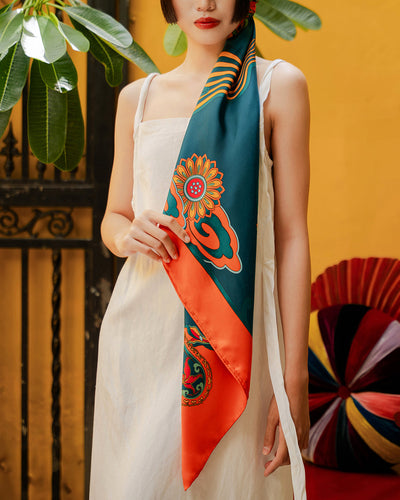
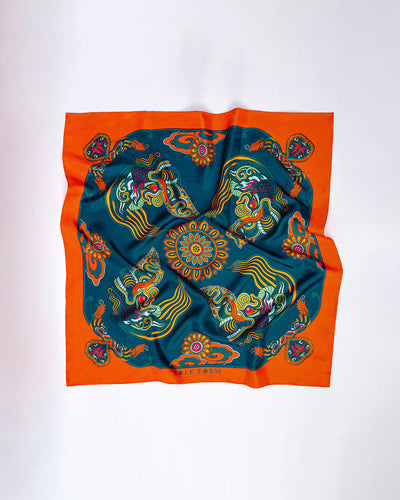
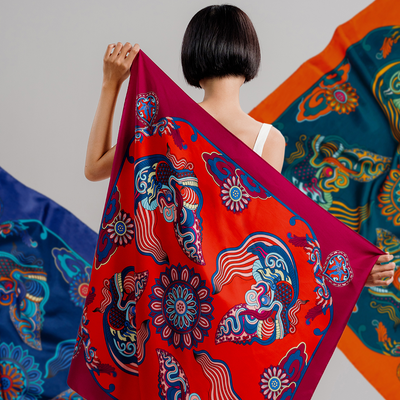
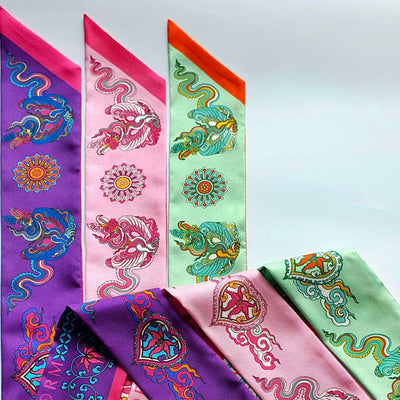
At Folk Form, a silk hair scarf is named for how it is worn. Every square is mulberry silk, hand screen-printed through both faces in our Hanoi atelier, with edges rolled and stitched by hand. The 26 inch square ties neatly as a headband or a knot at the nape, and the 36 inch square covers the whole head. A piece like the purple Phoenix Dance 26 inch head scarf shows the smaller size, and our 36 inch silk hair scarves show the larger one.

Satin scarf size: what 90 x 90 means
A 90 x 90 scarf is a 36 inch square, the classic size for a full head wrap or a loose knot at the neck. Smaller squares at 22 inches (55 cm) and 26 inches (65 cm) suit bag handles, wrists and headbands, and the 44 inch (110 cm) square works as a shawl. The silk scarf size guide shows each size worn.
Frequently asked questions
Is satin the same as silk?
Satin is a weave and silk is a fiber. A satin fabric can be made of silk, polyester or another fiber, so check the fiber content line on the label.
How can I tell real silk from polyester satin?
Read the fiber line on the label, then try a burn test over a sink, away from anything flammable. Silk smells like burning hair and leaves a soft ash, while polyester melts into a hard bead.
What is mulberry silk satin?
It is mulberry silk woven in a satin weave, which gives a glossy face and a duller back. Silk charmeuse is a common example.
Is silk twill different from silk satin?
Both are silk, woven differently. Twill shows fine diagonal lines and a quieter sheen, while satin has long surface floats and a glossier face.
Is a silk or satin scarf the better gift?
For a gift meant to last, choose a scarf whose label reads 100% silk. Satin describes the surface, so a satin scarf can be silk or polyester, and the fiber line is what settles it.
Are satin pillowcases made of silk?
Some are, many are not. A satin pillowcase is often polyester; a silk one should list silk and its percentage on the label, usually with a momme weight.
What size is a 90 x 90 satin scarf?
A 90 x 90 cm scarf is a 36 inch square. It is large enough to wrap the head fully or tie loosely at the neck.
Browse every guide in our silk scarf and tie guides.