Vietnamese Gifts: What to Bring From Vietnam and What to Give a Host
Alice NguyenQuick answer: Bring home things Vietnam is known for that also survive the flight: silk scarves and ties, lacquerware, small Bat Trang ceramics, coffee with a metal phin filter, green or lotus tea, and a palm-leaf conical hat. Check silk labels before you pay. When you visit a Vietnamese host, fruit, good tea or a well-made gift from the US, offered with both hands, is widely welcomed.

Evening in Hanoi's Old Quarter: motorbikes thread past shopfronts stacked with folded silk, a vendor fans charcoal under a grill, and somewhere a kettle is going for tea. You have one suitcase, a list of people back home, and a quiet worry about paying silk prices for something that is not silk. This guide covers both halves of the question American travelers ask, what to bring back from Vietnam and what to bring to a Vietnamese home, using customs that are widely observed and hedged where families differ.
What to bring home from Vietnam
The gifts that land well share three traits: they are clearly Vietnamese, they survive a long flight, and they get used. Here are the ones travelers come back to again and again.
Silk scarves, ties and fabric
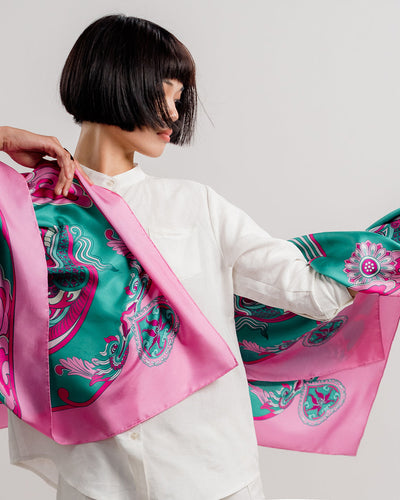
Silk is the classic Vietnam gift. In Hanoi, Hang Gai street in the Old Quarter has long been known for its silk shops, and the town of Hoi An is known for tailors who sew clothes to measure within a few days. A silk scarf weighs almost nothing, folds into a pocket of the suitcase, and suits nearly any recipient.
Labels in tourist markets vary, so check the fiber before you pay. Look for a clear fiber statement such as "100% mulberry silk," edges rolled and stitched by hand, and a print that reads clearly from the back. Our Vietnamese silk scarf guide explains what to look for before you pay.
An ao dai
The ao dai is Vietnam's national dress: a long, fitted tunic with high side slits, worn over loose trousers. Its modern fitted form took shape in the twentieth century, building on earlier Vietnamese tunics, and today it appears at weddings, at Tet and on formal occasions. Tailors in Hanoi, Hoi An and Ho Chi Minh City commonly make one to measure within days, and prices vary widely with the fabric and the shop. If the trip is too short for fittings, our short sleeve silk ao dai is made in mulberry silk and sold in the US.
Lacquerware
Vietnamese lacquer, called son mai, is built up in many thin layers, sanded and polished between coats, and often inlaid with crushed eggshell or mother-of-pearl. Trays, bowls, boxes and small panels are the usual souvenirs. They are light for their size and wrap well in clothing, though deep scratches show on a polished face, so keep each piece in its own sleeve.
Ceramics from Bat Trang
Bat Trang, a village just outside Hanoi, has made pottery for centuries, and many visitors make a half-day trip to see kilns and buy cups, teapots and vases. Ceramics are heavy and fragile, so carry small pieces in your hand luggage, wrapped in a sweater.
Coffee and a phin filter
Vietnam is one of the world's largest coffee producers, growing mostly robusta beans, and its coffee culture is everywhere: iced coffee with sweetened condensed milk on street corners, and in Hanoi, egg coffee whipped into a pale foam. A bag of ground coffee and a small metal phin filter make a gift a friend can use the next morning. Buy sealed, roasted coffee for the flight.
Green tea and lotus tea
Tea is part of daily hospitality in Vietnam, and a pot is often poured the moment a guest sits down. Thai Nguyen province, north of Hanoi, is known for its green tea. Lotus tea, green tea scented with lotus flowers, is closely tied to Hanoi and is often given as a gift. Choose sealed tins for the trip home.
A conical hat
The non la, a conical hat woven from palm leaves over bamboo rings, is the image of Vietnam many travelers carry home. A hat is bulky but nearly weightless, so carry it by hand onto the plane.
Comparing popular Vietnam souvenirs
| Gift | Where it is known | Packing | Good for |
|---|---|---|---|
| Silk scarf or tie | Hanoi's Hang Gai street, Hoi An | Flat, light, any bag | Parents, colleagues, hosts at home |
| Ao dai | Tailors across Hanoi, Hoi An, Ho Chi Minh City | Folded flat in a garment sleeve | Yourself, a partner, a daughter |
| Lacquerware | Hanoi and Ho Chi Minh City workshops | Light; protect the polished face | Home, office desks |
| Bat Trang ceramics | Bat Trang village near Hanoi | Heavy; carry in hand luggage | Tea and coffee drinkers |
| Coffee and phin filter | Central Highlands coffee, sold everywhere | Sealed bags; declare as food | Coworkers, neighbors |
| Green or lotus tea | Thai Nguyen, Hanoi | Sealed tins; declare as food | Older relatives, tea lovers |
| Conical hat | Sold nationwide | Bulky; carry by hand | Children, a keepsake for yourself |
What about bringing food into the US?
Declare every food item on your customs form. Packaged tea and roasted coffee are commonly allowed once declared, while fresh fruit, meat and many plant products are generally not. Rules change, so check current US Customs and Border Protection guidance before you pack anything edible.
Is the dragon Vietnamese?
Yes. The dragon is one of the central symbols of Vietnamese culture, and the old name of Hanoi, Thang Long, means "ascending dragon." For an American traveler this matters in a practical way: you will see dragons on silk, lacquer and ceramics in every shopping street, and knowing what a Vietnamese dragon looks like helps you tell a considered piece from a generic souvenir.
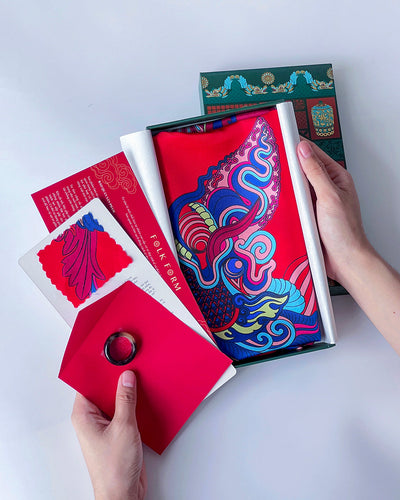
The Vietnamese dragon has its own look. The dragon of the Ly dynasty, found at the Thang Long Imperial Citadel in Hanoi, has a soft body that ripples like water, no scales and a pearl held in its mouth. It is a rain-bringing dragon from a rice-growing culture, a benevolent creature, and in Vietnamese symbolism the dragon stands for strength, wisdom and success. Our guide to the Ly dynasty dragon tells its story, and our piece on what Vietnamese silk motifs mean covers the phoenix, lotus and mandarin ducks too.
What to give a Vietnamese host or friend
When you are invited into a Vietnamese home, bring something. Modest, good-quality things are the norm. These are widely observed customs; families differ, so treat them as a guide.
- Fruit. A bag or basket of good fruit is a common gift when visiting, and it is easy to buy on the way.
- Tea, sweets or cakes. A tin of tea or a box of pastries suits almost any household.
- Something from your own country. A local specialty from home, such as maple syrup, chocolate or a regional craft, gives your host a story to tell.
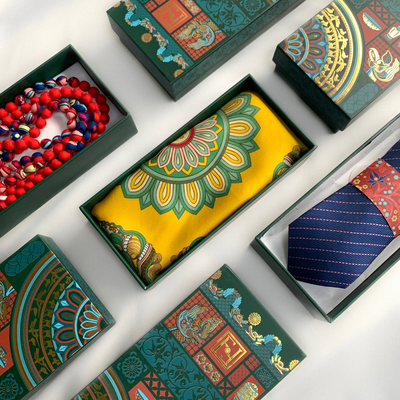
- A considered personal gift. For a close friend, a silk scarf, a good pen or a book shows thought without being lavish.

How to give a gift in Vietnam
Offer the gift with both hands, a small bow of the head, and a few warm words. Receive anything you are given the same way. Many hosts set a gift aside and open it later, after the guest has gone; this is simple courtesy, so do not read anything into it. Red and gold wrapping read as festive, especially around Tet. Some families avoid gifts of knives or scissors, which can suggest cutting a relationship, so skip sharp objects.
Gifts at Tet, the Lunar New Year
Tet is the season of visiting, and it carries its own customs. Children commonly receive lucky money in small red envelopes, called li xi, and visitors bring tea, wine, candied fruit or boxed sweets. If you are visiting during Tet, a gift in red or gold paper is a gracious choice. Our Tet gifts guide covers silk scarves and ties for the holiday.
| Occasion | Common gifts | Good to know |
|---|---|---|
| Dinner at a home | Fruit, tea, pastries | Give with both hands |
| Tet visit | Tea, wine, candied fruit, red envelopes for children | Red and gold wrapping read as festive |
| Thanking a mentor or teacher | Tea, flowers, a silk scarf or tie | A modest, well-made gift is the norm |
| Business meeting | A specialty from your home city, a quality desk item | Keep it modest and neatly wrapped |
What gift should I give a Vietnamese woman?
Choose something personal and well made, sized to how close you are. For a friend's mother or an older woman, a silk scarf is a gracious choice, and the phoenix, a symbol of feminine grace, suits her well. For a colleague, tea or a small accessory is enough. A specialty from your home country also works well, because it carries a story she has not heard.
Buying Vietnamese gifts from the US
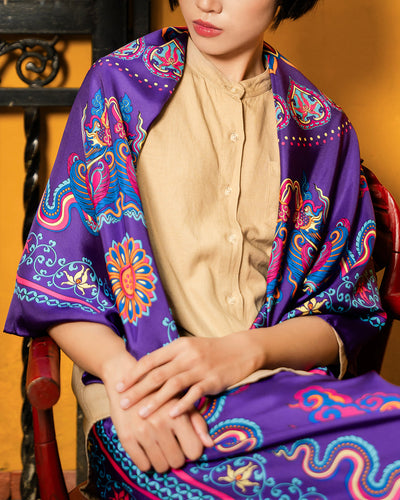
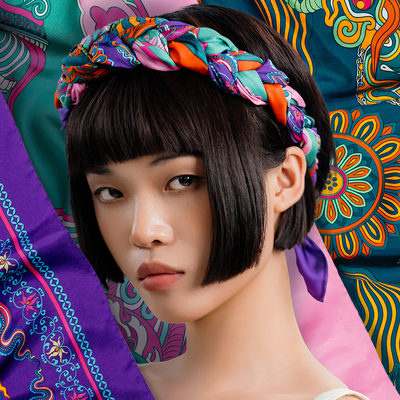
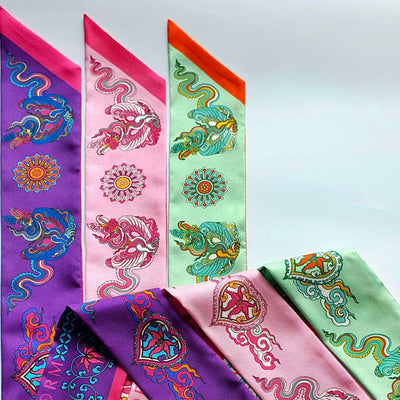
Many people searching for Vietnamese gifts have no trip planned. They want a piece of Vietnam for a friend, a parent or themselves, and they want to be sure it is real. Folk Form is one way to do that: our scarves are cut from mulberry silk woven from yarn sourced in Hangzhou, hand screen-printed through both faces in our Hanoi atelier, one screen for each color, and finished with edges rolled and stitched by hand. You can buy them in the US, and we pay the US import duty, so nothing is due at the door.
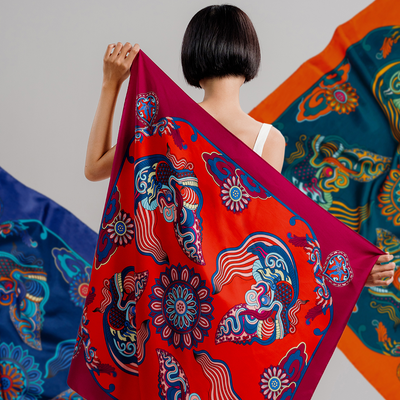
The prints are drawn from Vietnamese heritage art. Our Dragon Dreams scarves carry four Ly dynasty dragons, one in each corner, turned toward a leaf at the center, so the square folds to show a dragon whichever corner faces out. The 36 inch red Dragon Dreams square is a natural gift for someone starting a business, a new role or a new home. For a parent, the gifts for mom collection gathers scarves chosen for mothers.

Whether you buy in Hanoi or online, test silk the same way at home. Silk burns with a smell like burning hair and leaves a soft ash that crushes between your fingers. Polyester melts into a hard bead. Do it with a loose thread over a sink, away from anything flammable. Our article on how to tell if silk is real covers the other checks.
Frequently asked questions
What should I bring back from Vietnam?
Silk scarves or ties, lacquerware, Bat Trang ceramics, coffee with a phin filter, green or lotus tea, and a conical hat are the classic choices. Silk and lacquer pack most easily.
Is the ao dai Chinese or Vietnamese?
The ao dai is Vietnam's national dress. Its modern fitted form developed in the twentieth century from earlier Vietnamese tunics, and it is worn at weddings, at Tet and on formal occasions.
Do Vietnamese people like dragons?
Yes. The dragon is a central symbol in Vietnam, linked to a founding legend and to the old name of Hanoi, Thang Long, meaning "ascending dragon." It stands for strength, wisdom and success.
What is a good gift for a Vietnamese host?
Fruit, tea, pastries or a specialty from your own country are common and welcome. Offer the gift with both hands.
Can I bring Vietnamese coffee and tea into the US?
Packaged roasted coffee and tea are commonly allowed when declared on your customs form. Check current US Customs and Border Protection guidance before you travel.
How can I tell if silk bought in Vietnam is real?
Check for a clear fiber label, hand-rolled edges and a print that shows on the back. At home, burn a loose thread over a sink: silk smells like burning hair and leaves a soft ash, while polyester melts into a hard bead.
How do I pack a silk scarf for the flight home?
Fold it flat in tissue paper and keep it in your carry-on, away from liquids and anything with a sharp edge. Silk weighs very little, so several scarves fit in one flat envelope.
Browse every guide in our silk scarf and tie guides.